
Jaipur: The Pink City of Royal Heritage and Timeless Culture
Nestled in the heart of Rajasthan, Jaipur is a city that blends royal grandeur with vibrant traditions. Known as the Pink City, Jaipur isn’t just a destination—it’s a journey through centuries of history, architecture, art, and culture. From majestic forts and palaces to age-old customs still alive in the narrow lanes of the old city, Jaipur is a storyteller of India’s royal past.
A Glimpse into Jaipur’s Royal History
Founded in 1727 by Maharaja Sawai Jai Singh II, Jaipur was India’s first planned city. Unlike many Indian cities that grew organically, Jaipur was designed with precision based on ancient Vedic architecture (Shilpa Shastra). Its layout consists of nine blocks symbolizing the nine planets, a reflection of Jai Singh’s deep interest in astronomy and science.
The city was built when Amber, the previous capital, became overcrowded and lacked space for expansion. The Maharaja envisioned a city that was both beautiful and functional. Under the guidance of Bengali architect Vidyadhar Bhattacharya, Jaipur took shape with broad streets, organized markets, and protective walls—an architectural marvel for its time.
In 1876, the entire city was painted pink to welcome the Prince of Wales (later King Edward VII), and since then, Jaipur has been affectionately known as the Pink City—a color symbolizing hospitality.
Old Culture Still Breathing in the Present
Even in its modern glow, Jaipur preserves its traditional soul. The lanes of the old city are still home to skilled artisans who practice age-old crafts like block printing, blue pottery, leather jutti making, and kundan-meena jewelry. You can still find families who have been handcrafting the same art for generations.
The city’s bustling bazaars—Johari Bazaar, Bapu Bazaar, and Tripolia Bazaar—are not just shopping destinations; they are cultural experiences. Here, bargaining is an art, spices are treasures, and colorful textiles flutter like stories waiting to be told.
Rajasthani folk music and dance performances are a part of everyday life, especially in heritage hotels and local festivals. The sound of the Ravanahatha (a traditional string instrument), the sight of Ghoomar dancers twirling in vibrant lehengas, and the aroma of dal baati churma from a street-side eatery—Jaipur keeps its culture alive with every breath.
Heritage Landmarks That Speak of Glory
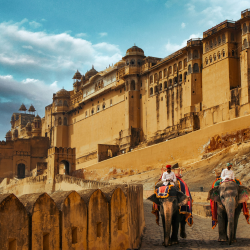
Amber Fort: With its grand courtyards, mirror-studded halls, and elephant rides, Amber Fort is a majestic blend of Mughal and Rajput architecture.
City Palace: The royal residence still occupied by the descendants of the Jaipur royal family.
Jantar Mantar: A UNESCO World Heritage site, this astronomical observatory is a testimony to Jai Singh II’s scientific vision.
Hawa Mahal: The iconic “Palace of Winds” with its 953 small windows was built so royal women could observe street festivities unseen.
Why Jaipur Leaves a Mark
What makes Jaipur unforgettable is not just its architecture or history, but the spirit of its people. From turbaned locals greeting you with a warm “Khamma Ghani” to the vibrant festivals like Teej, Gangaur, and Diwali celebrated with unmatched energy—Jaipur feels like a living canvas of India’s rich heritage.
Whether you’re a history lover, a culture explorer, or a curious traveler, Jaipur invites you to step into a world where the past dances gracefully with the present.
Ready to explore Jaipur?
Let “Travel with Somesh” be your guide into the stories, colors, and hidden gems of this royal city.